Exhibit Types / Museum Style Brand Installations Atlanta
Museum Style Brand Installations Atlanta
Transform your brand narrative into captivating museum-style installations that command attention across Atlanta's dynamic convention landscape, from the expansive halls of the Georgia World Congress Center to the strategic spaces of AmericasMart and beyond.
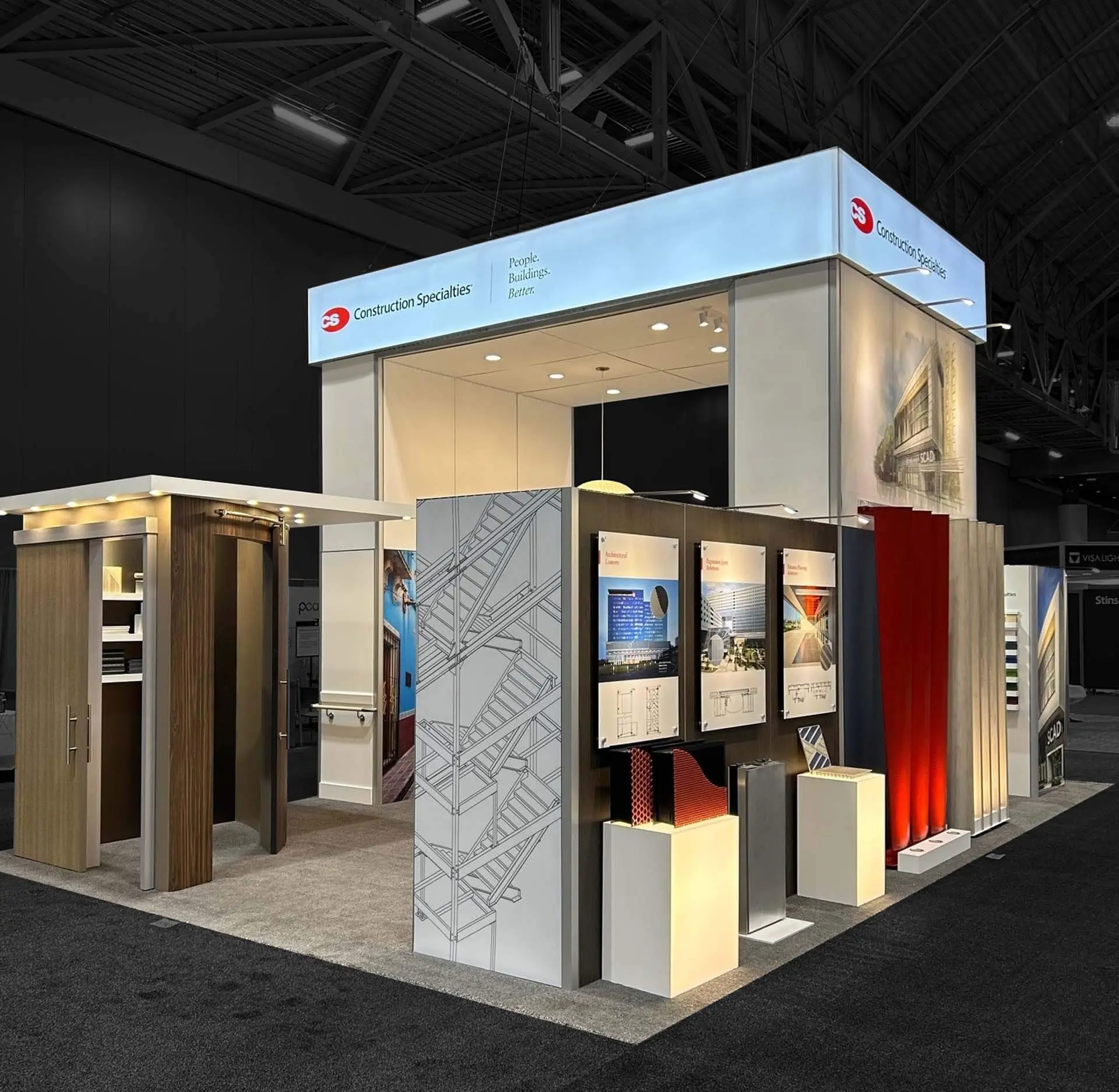
Strategic Planning Across Atlanta's Venue Clusters
Initiating a museum-style brand installation begins with comprehensive venue mapping across Atlanta's operational zones, ensuring the design blueprint accommodates the unique dimensional and access constraints of each site. Downtown Atlanta's Georgia World Congress Center offers vast contiguous exhibit space ideal for sprawling installations that incorporate multi-level pedestals and suspended elements, while Centennial Olympic Park provides outdoor-adjacent opportunities for hybrid indoor-outdoor narratives during public activations. AmericasMart Atlanta complements this with its market-week rhythm, where installations must interface with showroom traffic flows and temporary partitioning systems.
Airport and College Park venues like the Georgia International Convention Center demand considerations for ATL SkyTrain proximity, facilitating rapid crew mobilization for fly-in conferences where time-sensitive setups prioritize lightweight yet robust frameworks. Gateway Center Arena adds sports-adjacent activation potential, requiring reinforced bases to handle vibrational loads from arena events. Northwest at Cobb Convention Center, planning shifts toward ballroom-integrated designs that blend smoothly with regional trade show formats, emphasizing compact modularity for multi-room configurations.
Design Principles Tailored to Downtown Demands
In the downtown cluster, museum-style installations leverage the Georgia World Congress Center's planning guide specifications for load-bearing capacities and fire-rated materials, crafting exhibits that evoke institutional gravitas through polished casework and vitrine integrations. These designs often feature chronological brand timelines rendered in oversized typographic elements and relic-like product showcases, calibrated to the venue's high-ceilinged halls that allow for dramatic vertical accents. Centennial Olympic Park's adjacency enables extended experiential paths that spill into public realms, enhancing foot traffic capture during conventions.
AmericasMart's permanent infrastructure influences designs toward semi-custom hybrids, where installations incorporate branded millwork that aligns with the facility's showroom aesthetics. Planners coordinate sightline analyses to ensure narrative visibility from escalator banks and concourses, employing subtle LED underlighting to simulate gallery spotlights. This zone's buyer-showroom intensity necessitates durable surface finishes resistant to repeated touchpoints, ensuring the installation maintains pristine condition through market weeks.
Execution timelines synchronize with GWCC's advance ordering windows for utilities and rigging, preventing bottlenecks in power distribution for interactive holography or ambient soundscapes that immerse visitors in the brand story.
Airport Corridor Logistics for Fly-In Events
The airport-adjacent Georgia International Convention Center's floor plans dictate streamlined installation footprints, with emphasis on wheeled substructures for efficient navigation through SkyTrain-linked loading docks. Museum-style builds here prioritize rapid assembly sequences, often deploying pre-fabbed wall panels clad in fabric-wrapped composites that assemble into gallery-like enclosures within hours. This suits fly-in conferences where brands seek to unveil heritage collections or visionary prototypes to jet-lagged international delegates craving structured engagement.
Gateway Center Arena's configuration supports arena-adjacent activations, where installations incorporate acoustic baffling to mitigate event noise, preserving the hushed reverence of museum pacing. Planners integrate directional audio cues and proximity sensors to trigger contextual narratives, enhancing the immersive pull amid transient crowds. Load-in coordination leverages the venue's proximity to Hartsfield-Jackson, minimizing transit disruptions for oversized components like sculptural brand icons.
Sustainability in this corridor focuses on low-VOC adhesives and modular disassembly, aligning with quick-turn meeting programs that cycle multiple activations weekly.
Suburban Adaptations for Regional Scale
Northwest Cobb Convention Center's corporate event focus calls for museum-style installations that scale elegantly within ballroom dividers, employing tension-fabric graphics stretched over aluminum frames to create smooth gallery walls. These setups often highlight executive storytelling through integrated AV podiums and artifact plinths, designed for association gatherings where decision-makers linger in contemplative zones. Planners account for the submarket's regional trade show cadence, ensuring designs facilitate incremental expansions for varying attendee volumes.
Northeast extensions like Gas South Convention Center in the Duluth-Gwinnett corridor extend this flexibility, with installations navigating expo hall pillars via cantilevered display arms that maintain unobstructed narrative flow. Community event demands here favor inclusive access ramps and low-profile bases, broadening appeal across demographics. Coordination emphasizes pre-event surveys of HVAC zoning to prevent environmental fluctuations from impacting delicate material finishes.
Turnkey oversight spans permitting for custom flooring overlays, ensuring compliance with suburban fire marshal protocols distinct from downtown's rigorous standards.
Fabrication and Material Mastery
Core to museum-style efficacy lies in fabrication precision, sourcing substrates that replicate archival museum standards such as UV-resistant acrylics for vitrines and powder-coated metals for structural integrity. In Atlanta's multi-zone deployments, these elements must endure diverse microclimates, from GWCC's controlled arenas to outdoor-proximate Centennial setups, incorporating expansion joints for thermal resilience. Planners specify layered lighting hierarchies—ambient washes, task-focused spots, and fiber-optic accents—to sculpt depth and drama akin to institutionally curated spaces.
Interactive fidelity emerges through embedded sensors and RFID triggers that personalize visitor journeys without overt tech intrusion, preserving aesthetic purity. For AmericasMart's showroom synergy, fabrications include magnetic mounting systems for swift graphic refreshes during market cycles. Quality assurance protocols mirror museum conservation practices, with pre-installation climate testing to safeguard organic elements like wood veneers or textile banners.
Logistical manifests detail Sequence of Assembly diagrams, calibrated to venue-specific freight elevators and labor windows across clusters.
Onsite Coordination and Performance Optimization
Deployment phases synchronize with venue advance guides, such as GWCC's detailed planning timelines for utility trenching and catwalk access, ensuring museum-style elements integrate flawlessly. Coordinators orchestrate phased handoffs from design renderings to physical manifestation, with real-time adjustments for hall reconfigurations common in high-demand downtown schedules. GICC's SkyTrain logistics streamline component deliveries, enabling Just in Time staging for time-compressed fly-in reveals.
Performance tuning post-setup involves dwell analytics via heat-mapping cameras and engagement beacons, quantifying how spatial narratives convert browsers to leads. Suburban venues like Cobb benefit from this data to refine future iterations, adapting plinth heights or pathway widths based on demographic flows. Teardown protocols emphasize non-destructive disassembly, repackaging for multi-event rotations across Atlanta's zones.
Sustained oversight includes 24/7 monitoring feeds during event peaks, mitigating risks from crowd surges or environmental shifts.
Measurement and Iterative Refinement
Quantifying ROI for museum-style installations hinges on multi-metric dashboards tracking footfall, interaction depth, and sentiment via integrated QR pathways and NFC touchpoints. In GWCC's convention marathons, these insights reveal peak engagement windows, informing real-time staff briefings for guided tours. Airport venues' transient audiences yield data on rapid capture rates, refining entry vignettes for higher conversion.
Downtown market weeks at AmericasMart provide longitudinal benchmarks, contrasting installation variants to isolate design levers like lighting intensity or artifact sequencing. Suburban deployments at Cobb or Gas South highlight scalability thresholds, guiding modular evolutions for community versus corporate scales. Planners aggregate this into post-event debriefs, forecasting adaptations for Atlanta's evolving demand splits.
Iterative cycles feed master design libraries, ensuring each zone's installations evolve with venue master plan updates.
FAQ
What distinguishes museum-style installations from standard trade show booths?
Museum-style installations prioritize immersive storytelling through gallery-like curation, artifact-grade materials, and controlled ambiance, creating contemplative brand experiences versus transactional booth interactions. They excel in Atlanta venues like GWCC where narrative depth captivates convention delegates.
How do venue clusters influence museum-style design choices?
Downtown clusters like Georgia World Congress Center support expansive verticality, airport sites like GICC emphasize rapid modularity, and suburban spots like Cobb Convention Center favor scalable ballroom integrations, all coordinated for zone-specific logistics.
What logistical challenges arise in Atlanta's airport corridor?
SkyTrain access at Georgia International Convention Center demands lightweight, wheeled frameworks for swift load-ins, paired with acoustic treatments at Gateway Center Arena to maintain immersion amid arena proximities.
Can museum-style setups adapt to outdoor-adjacent activations?
Yes, designs incorporate weather-resilient enclosures for Centennial Olympic Park extensions, blending indoor gallery flows with public pathways while adhering to GWCC's outdoor permitting.
How is sustainability addressed in these installations?
Protocols feature recyclable composites, low-energy LEDs, and modular disassembly across all zones, aligning with corporate ESG goals and venue recycling mandates like those at AmericasMart.
What metrics define success for these exhibits?
Key indicators include dwell times exceeding five minutes, interaction rates above 40%, and lead quality scores from post-engagement surveys, benchmarked against Atlanta's multi-zone event data.
Related Atlanta scopes
Continue with a connected Atlanta scope.
Inquiry
Trade Show Display Rental of Atlanta
Rental-first Atlanta trade show systems designed around venue-aware planning, modular reuse, and cleaner show-floor execution.