Locations / Trade Show Display Rental Planning in West Midtown Atlanta, GA
Trade Show Display Rental Planning in West Midtown Atlanta, GA
Strategic coordination resources for West Midtown organizations participating in Atlanta's distributed trade show and convention ecosystem across downtown, airport, and northwest venues.
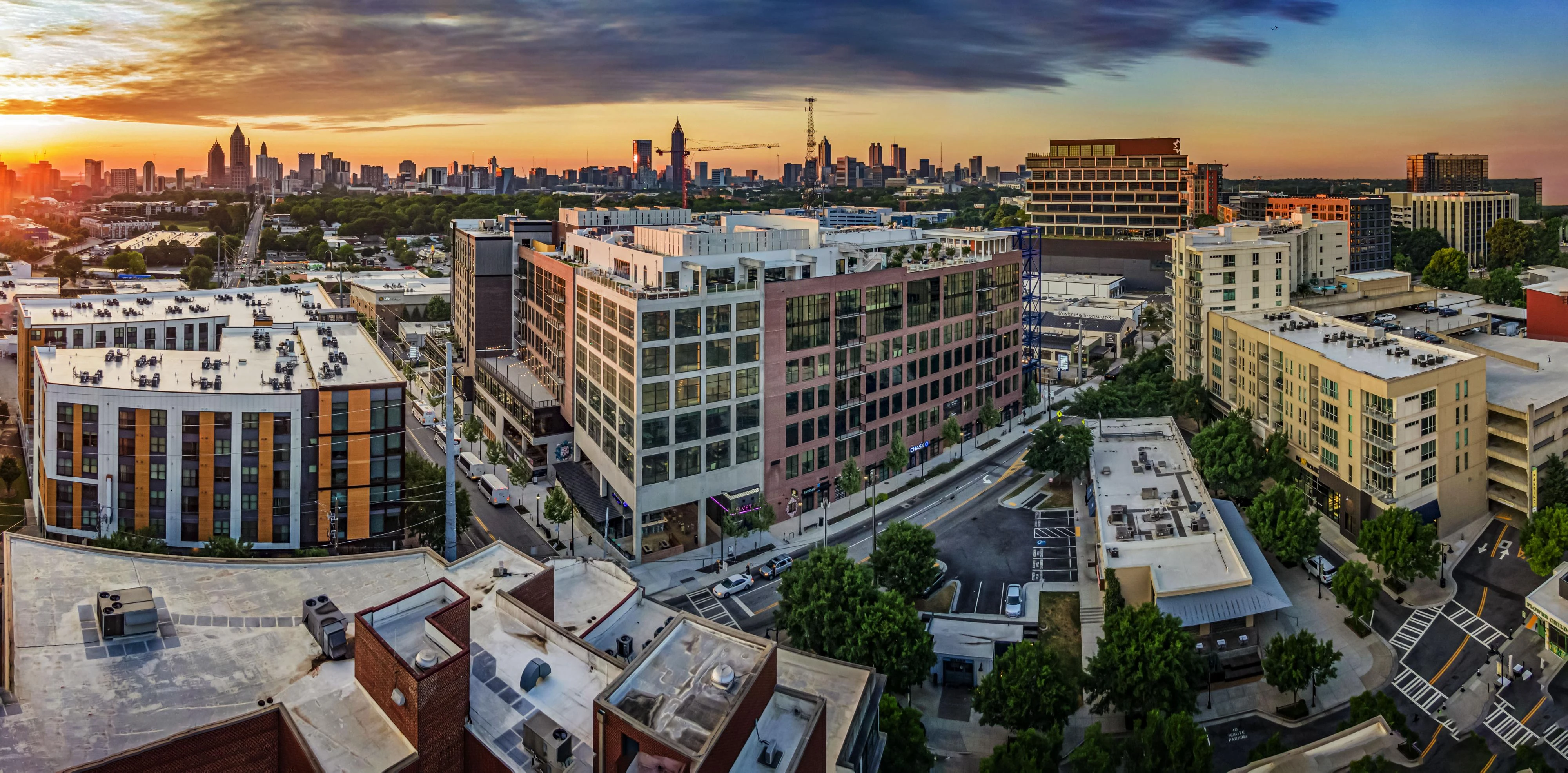
West Midtown's Role Within Atlanta's Distributed Trade Show Zones
The documented structure of Atlanta's convention demand creates four operational zones that influence every aspect of exhibit planning. Downtown remains the flagship concentration because the Georgia World Congress Center, Centennial Olympic Park, and AmericasMart generate the highest density of exhibit halls, buyer showrooms, and public activations. West Midtown's geographic placement provides practical access to this core cluster via established transportation corridors, supporting coordinated scheduling for multi-day events without implying on-site presence.
The airport and College Park corridor serves fly-in convenience through direct SkyTrain connections to the Georgia International Convention Center and Gateway Center Arena. These venues handle national associations and corporate programs where attendee travel patterns favor quick ground transportation from arrival points. Planning resources for West Midtown organizations highlight how this southern zone complements downtown activities, enabling unified themes that travel between facilities based on specific show calendars.
Northwest corridors including Cumberland and Cobb capture substantial corporate, association, and community-driven events at facilities such as the Cobb Galleria Centre. This submarket benefits from suburban hotel density and parking capacity that differs from downtown density. West Midtown's adjacency creates natural operational efficiencies for exhibitors who maintain calendars spanning both downtown prestige and northwest practicality, allowing rental inventories to be optimized for varied audience expectations.
The Duluth and Gwinnett corridor, led by the Gas South Convention Center, rounds out the ecosystem by serving technology, manufacturing, and regional groups. While representing a longer transit consideration from West Midtown, inclusion in comprehensive planning allows organizations to capture the full spectrum of Atlanta opportunities with consistent rental approaches.
Venue-Specific Coordination for Downtown Atlanta Facilities
The Georgia World Congress Center requires exhibits scaled for expansive halls with attention to sight lines, structural elements, and documented traffic flows outlined in official planning materials. Rental coordination begins with review of floor plans and technical specifications to ensure displays command attention while complying with height and loading parameters. This venue often serves as the anchor for multi-hall events that demand modular components capable of expansion or contraction.
Centennial Olympic Park operates as a complementary activation space frequently paired with indoor programming. Planning here incorporates environmental factors, visibility from multiple approach angles, and integration with the park's open layout and surrounding attractions. Rental solutions emphasize durability and high-impact graphics that perform effectively in this semi-outdoor context alongside downtown indoor components.
AmericasMart Atlanta functions as a global wholesale platform with industry-specific buildings dedicated to categories including home, apparel, and gifts. Display planning differs by prioritizing intimate storytelling, lighting, and flexible configurations that support buyer engagement rather than broad crowd circulation. Coordination across its campus requires precise scheduling for setup in multiple locations during key market periods.
Successful downtown execution from West Midtown involves creating thematic continuity that adapts to each facility's distinct operational profile while maintaining efficiency in material movement between sites when events overlap.
Planning Considerations for Airport Corridor and Suburban Venues
The Georgia International Convention Center and Gateway Center Arena leverage their airport proximity and SkyTrain connectivity to attract time-sensitive national programs. Rental displays for these spaces benefit from designs that support rapid installation and portability, reflecting the fly-in attendee profiles common to this corridor. Coordination emphasizes alignment with transportation infrastructure and venue-specific floor plans that accommodate both convention and arena-style programming.
Cobb Galleria Centre in the northwest submarket draws events that value accessibility, parking, and nearby accommodations. Exhibit strategies here often incorporate interactive elements and regional messaging suited to corporate and association audiences that differ from downtown demographics. Planning resources address how rental systems can transition effectively between the denser downtown halls and these more spacious suburban environments.
Operational details such as loading dock procedures, electrical specifications, and AV integration vary by facility. Authoritative coordination incorporates these requirements during initial strategy development to prevent last-minute adjustments that impact budgets or outcomes. This approach supports exhibitors whose calendars span all four zones without favoring any single location.
West Midtown's position as a secondary district creates opportunities to serve as a planning nexus for organizations that maintain hybrid event schedules combining downtown scale with suburban convenience and airport efficiency.
Modular Rental Systems and Configuration Best Practices
Modular rental inventories deliver the adaptability required to address Atlanta's range of venue scales and event types. These systems support reconfiguration from large island footprints at the Georgia World Congress Center to inline presentations at AmericasMart or more compact activations at suburban centers. The approach eliminates storage overhead while providing access to contemporary components including integrated lighting, digital displays, and structural elements.
Configuration planning begins with clear event objectives and audience analysis for each participating zone. Downtown conventions may require commanding scale and technology integration, while market showroom displays at AmericasMart emphasize product-focused environments with softer aesthetics. Suburban venues often allow for more experiential elements given different attendee dwell times and interaction patterns.
Budget predictability represents a core advantage of rental coordination. Organizations can scale participation across multiple events without capital tied to ownership, converting costs into operational expenses that match actual show frequency. Professional planning assistance includes 3D visualizations, material specifications, and timeline development that align with each venue's published guidelines.
Documentation of configurations across events creates institutional knowledge that improves future selections. This iterative process helps West Midtown-based planners refine their rental strategies based on measured performance rather than assumptions.
Operational Logistics and Timeline Coordination
Effective coordination addresses the full sequence from initial concept through post-event evaluation. For Atlanta events, this includes alignment with venue-specific move-in schedules, material handling protocols, and dismantle windows published by facilities such as GWCC and GICC. Early integration of these parameters prevents conflicts that arise when participating in multiple zones within short timeframes.
Transportation planning considers Atlanta's traffic patterns between West Midtown, downtown, the airport corridor, and northwest suburbs. Timelines incorporate buffer periods that account for variable conditions while maintaining the precision required for same-day or next-day transitions between paired events. Rental partners manage these logistics as part of turnkey service without requiring exhibitor oversight of physical details.
Technical compliance covers electrical, internet, and structural requirements that differ across venues. The Georgia World Congress Center planning guide, for example, details specific load capacities and utility access points that must be factored into display selection. Similar documentation exists for other major facilities, forming the foundation for accurate advance planning.
Post-event processes include outbound shipping coordination, performance reporting, and knowledge transfer for subsequent events. This closed-loop approach supports continuous improvement across Atlanta's seasonal calendar of conventions, markets, and expos.
Budget Optimization and ROI Measurement Frameworks
Rental models transform exhibit expenses from fixed capital investments into flexible operational costs that scale with participation levels. This proves particularly relevant for organizations whose calendars include a mix of high-profile downtown conventions, targeted AmericasMart market weeks, and selective suburban or airport events. Planning identifies which shows deliver strongest returns to inform allocation decisions.
Comprehensive budgeting incorporates direct rental fees alongside ancillary elements such as graphics production, shipping, installation coordination, and measurement tools. When viewed across a full year of Atlanta activity, this holistic view often demonstrates advantages over ownership models that require ongoing maintenance, storage, and periodic refreshment.
ROI frameworks should extend beyond lead counts to include metrics such as brand exposure value, qualified meetings secured, and pipeline influence. District-specific factors in West Midtown, such as proximity to creative talent pools, can inform how displays incorporate innovative elements that differentiate within crowded halls at GWCC or specialized environments at AmericasMart.
Regular review of outcomes against objectives enables data-driven adjustments for future cycles. Coordination resources facilitate this analysis by providing standardized reporting templates tailored to the distinct characteristics of each of Atlanta's four operational zones.
Specialized Approaches for AmericasMart and Market-Driven Activations
AmericasMart operates on a distinct rhythm of seasonal buying events that draw global wholesale audiences to its dedicated buildings. Display coordination here prioritizes environments that facilitate close-range product interaction, effective lighting for detail visibility, and flexible fixturing that adapts to category-specific merchandise. These activations often require different scaling than general convention exhibits at the nearby Georgia World Congress Center.
The multi-building campus creates unique logistical considerations for move-in, daily operations, and transitions between showrooms. Planning addresses these operational nuances by aligning rental components with published load schedules and facility standards. Integration of digital elements and follow-up mechanisms supports longer sales cycles typical of this market segment.
West Midtown organizations engaged in design, home, or lifestyle categories frequently participate in AmericasMart alongside broader Atlanta conventions. Unified planning creates efficiencies by allowing core rental elements to be refreshed or supplemented rather than rebuilt entirely for each event type. This strategy maintains brand coherence while addressing the distinct demands of wholesale showroom versus convention hall environments.
FAQ
How does West Midtown fit into Atlanta's overall trade show zones?
West Midtown serves as a secondary district with practical access to both the primary downtown cluster led by GWCC and AmericasMart and the northwest Cumberland-Cobb submarket. This positioning supports coordinated planning across Atlanta's four documented operating zones without requiring single-zone specialization.
Which major venues should West Midtown exhibitors plan for?
Primary venues include the Georgia World Congress Center, Centennial Olympic Park, and AmericasMart in downtown; the Georgia International Convention Center and Gateway Center Arena in the airport corridor; and Cobb Galleria Centre in the northwest. Each requires tailored rental configurations and scheduling considerations.
What advantages do rental displays offer for multi-zone Atlanta participation?
Rental systems provide modular flexibility for reconfiguration between venue types, eliminate storage requirements, ensure access to current technology, and convert costs into scalable operational expenses that match variable event calendars across downtown, airport, and suburban facilities.
When should planning begin for major Atlanta conventions?
Coordination for events at facilities like the Georgia World Congress Center typically starts 6 to 12 months in advance. This timeline allows for booth selection, design finalization, rental procurement, and alignment with each venue's published technical and scheduling guidelines.
Can the same rental inventory work across different Atlanta venues?
Yes. Modular rental systems are specifically designed for adaptation between large downtown halls, specialized AmericasMart showrooms, airport-adjacent facilities, and northwest suburban centers. Professional planning ensures appropriate reconfiguration for each location's requirements.
How should ROI be measured for trade shows in this market?
Effective measurement combines direct metrics such as qualified leads with broader indicators including brand exposure, meeting quality, and pipeline development. Analysis should account for differences between downtown convention audiences, market-week buyers at AmericasMart, and regional attendees at suburban venues.
Related Atlanta scopes
Continue with a connected Atlanta scope.
Inquiry
Trade Show Display Rental of Atlanta
Rental-first Atlanta trade show systems designed around venue-aware planning, modular reuse, and cleaner show-floor execution.