Venues / Gateway Center Arena College Park: Planning Exhibits for Atlanta’s Airport Corridor
Gateway Center Arena College Park: Planning Exhibits for Atlanta’s Airport Corridor
Authoritative coordination guidance for events that leverage immediate ATL SkyTrain access and arena-scale impact in the College Park zone.
Atlanta’s Four Distinct Event Operating Zones
Atlanta’s trade show and convention demand does not concentrate in a single downtown hub. Instead, it divides across four practical operating zones that reflect real attendee travel patterns, corporate preferences, and event formats. Downtown Atlanta serves as the flagship district led by the Georgia World Congress Center, Centennial Olympic Park, and AmericasMart, drawing large-scale exhibits, public activations, and market-week programming that benefit from urban density and pedestrian flow.
The Airport / College Park corridor, led by the Georgia International Convention Center and Gateway Center Arena, prioritizes fly-in convenience and compressed schedules. Further northwest, the Cumberland / Cobb submarket captures corporate meetings and regional shows at the Cobb Convention Center. Northeast in Duluth / Gwinnett, the Gas South Convention Center and Arena address community expos, consumer events, and arena-capable temporary environments.
This zonal structure guides planners toward venue selections that match audience logistics and program objectives rather than defaulting to the largest available footprint. Gateway Center Arena belongs squarely in the airport corridor, where speed of access and operational agility often outweigh the walking-distance amenities found downtown.
The Airport / College Park Corridor and Its Operational Profile
The Airport / College Park zone exists because certain events gain decisive advantages from immediate proximity to the world’s busiest passenger airport. Programs in this corridor frequently feature tight turnarounds, national or international attendance, and agendas that combine education, networking, and product showcases within two to three days. Gateway Center Arena extends the functional footprint of the Georgia International Convention Center, allowing general sessions, keynote presentations, and high-visibility brand experiences to occur in an arena setting while still utilizing adjacent convention infrastructure.
Planners who coordinate within this cluster report stronger attendance metrics when travel friction is minimized. The shared Convention Center Concourse creates a campus effect that supports efficient movement between sessions, exhibits, and dining functions without requiring shuttles or extended transit. This configuration proves especially effective for associations whose members prioritize productive time on-site over off-site entertainment or urban exploration.
Understanding the corridor’s tempo helps avoid scheduling mismatches. Events here tend to favor concise move-in windows, modular exhibit components, and activation formats that can be installed and removed rapidly around the arena’s primary sports and entertainment calendar.
Gateway Center Arena Location and Campus Connectivity
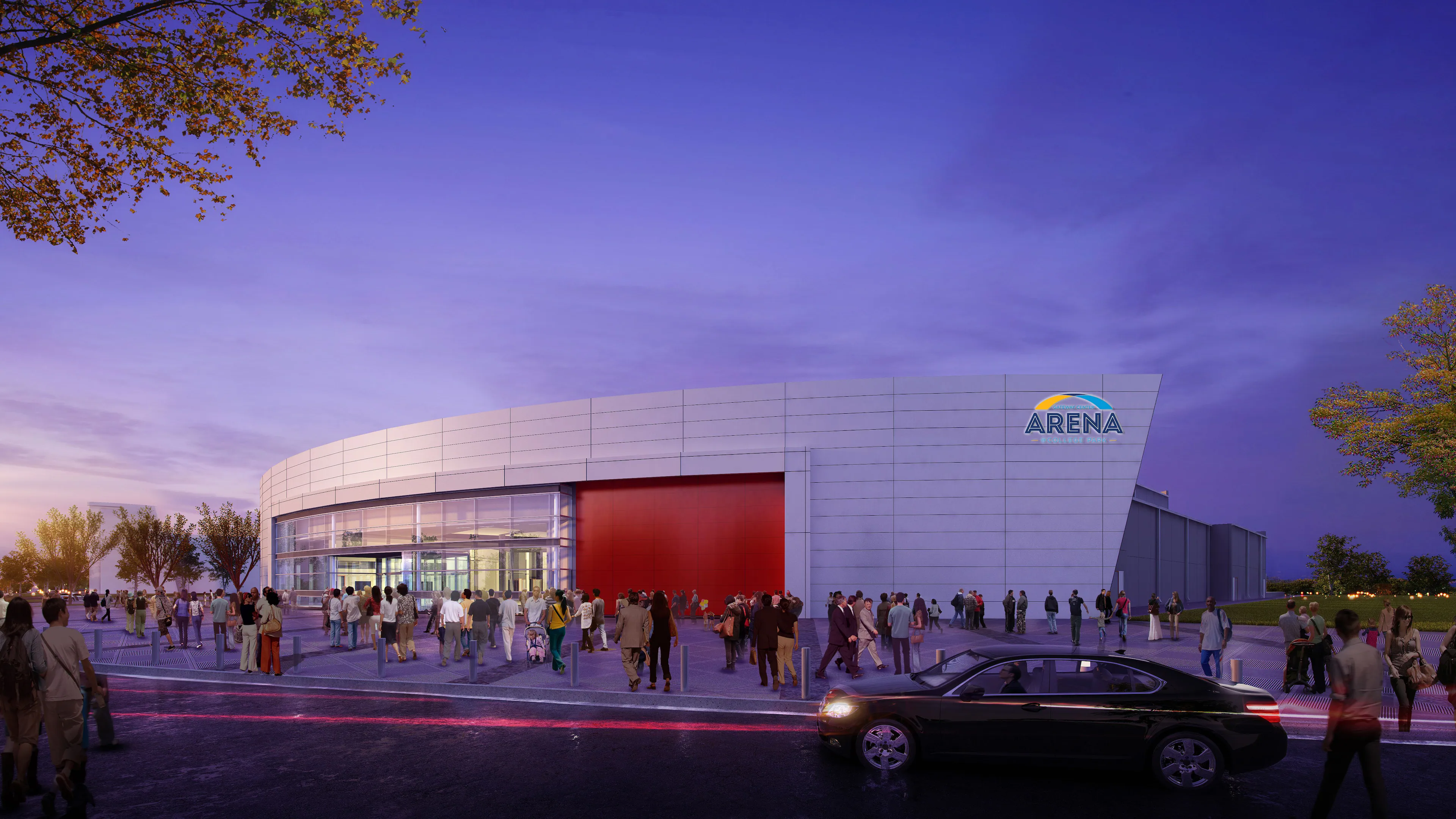
The arena is situated at 2330 Convention Center Concourse in College Park, Georgia, placing it within the same operational ecosystem as the Georgia International Convention Center. This adjacency is not incidental. Both venues draw on identical airport access advantages, most notably the ATL SkyTrain, which delivers attendees from the terminal directly to the concourse in minutes.
For exhibit and event planners, this linkage translates into predictable arrival windows, reduced need for ground transportation coordination, and the ability to publish precise itineraries that attendees can trust. Programs that spill beyond the GICC footprint gain breathing room in the arena for larger-scale presentations or immersive brand environments without sacrificing the convenience that defines the corridor.
The physical address on Convention Center Concourse further simplifies permitting, loading, and security planning by keeping all activity within a unified campus envelope. This reduces the fragmentation that can occur when events stretch across disconnected downtown sites.
Event Types That Align with Arena Capabilities
Gateway Center Arena supports high-energy brand events that benefit from the drama and sightlines of arena seating and staging. General sessions gain authority and presence when staged in this environment, particularly when the agenda includes product launches, awards, or motivational programming that requires emotional impact. The venue also accommodates sports-adjacent activations that leverage the arena’s inherent excitement to create memorable sponsor experiences.
Many successful programs combine arena usage for plenary content with exhibit or demonstration areas that extend the GICC footprint. This hybrid model allows associations to deliver both broad-reach messaging and targeted One on One interactions within a single, conveniently located campus. Fast-turn meeting programs similarly benefit because the arena’s technical infrastructure can support rapid setup of temporary environments without extensive custom construction.
Planners must weigh the arena’s primary calendar when selecting dates. Sports and entertainment commitments can influence available installation windows, making early alignment with the venue’s scheduling team essential for programs that require significant floor space or rigging.
Differentiating College Park from Other Atlanta Districts
College Park’s value proposition rests on efficiency rather than density. Unlike downtown Atlanta, where the Georgia World Congress Center, Centennial Olympic Park, and AmericasMart create a walkable ecosystem of exhibits, showrooms, and public spaces, the airport corridor optimizes for speed. Attendees can move from aircraft to session in under an hour, an advantage that matters for senior executives and international delegations with limited schedules.
Compared with the Cobb or Gwinnett corridors, College Park offers superior air connectivity while retaining access to major interstates for regional drive-in attendance. This balance makes the arena particularly attractive for hybrid audiences that combine heavy air travel with Southeast corporate participation. Exhibit strategies in this district therefore emphasize modularity and quick deployment over the elaborate, multi-day installations more common at flagship downtown venues.
The district-level nuance influences everything from freight routing to staff briefing. Coordination resources that understand these distinctions help clients avoid the costly assumption that all Atlanta venues operate under identical constraints or opportunities.
Logistical and Strategic Coordination Best Practices
Successful programs at Gateway Center Arena begin with explicit mapping of attendee journeys from arrival through departure. This includes aligning session times with SkyTrain headways, planning clear wayfinding between the arena and adjacent convention spaces, and designing exhibit zones that support natural traffic flow from general sessions. Early consideration of these elements prevents bottlenecks that can erode the time savings the corridor otherwise provides.
Exhibit coordination further requires attention to how arena scale affects visibility, acoustics, and lighting. Displays must read effectively from both floor level and seating bowls, often necessitating larger graphics, strategic lighting, and audio systems that do not conflict with the venue’s house capabilities. Program managers who treat these factors as design constraints from the outset achieve higher engagement and fewer on-site adjustments.
Longer-term planning involves building relationships with vendors familiar with the airport corridor’s tempo. Repeating events can leverage institutional knowledge around load-in sequences, preferred modular systems, and contingency protocols for weather-related flight disruptions that occasionally affect the market.
Building Future-Ready Programs in the Airport Corridor
As Atlanta’s event market continues to segment by audience travel preference, Gateway Center Arena represents a growing option for organizations seeking to balance impact with efficiency. Planners who master the nuances of this district can deliver programs that feel both ambitious and effortless to attendees arriving from across the globe.
The arena’s ability to host high-visibility brand moments within a fly-in friendly campus creates opportunities for creative integration of exhibits, technology, and live experiences that might be logistically prohibitive in more congested downtown environments. Coordination that respects both the venue’s arena DNA and its position within the four-zone Atlanta landscape consistently produces measurable improvements in attendance satisfaction and program ROI.
Organizations preparing multi-year event calendars should evaluate College Park not only for immediate convenience but also for its capacity to scale with evolving audience expectations around smooth travel and high-production environments.
FAQ
What zone does Gateway Center Arena belong to within Atlanta’s event market?
It operates in the Airport / College Park corridor, which focuses on fly-in conferences, sports-adjacent activations, and fast-turn programs that capitalize on direct ATL SkyTrain access to Hartsfield-Jackson Atlanta International Airport.
How does the arena integrate with nearby facilities?
Gateway Center Arena shares the Convention Center Concourse with the Georgia International Convention Center, allowing coordinated programs where general sessions and brand events in the arena extend the functional footprint of adjacent convention space.
What makes this venue distinct from downtown Atlanta options?
Its primary advantage is rapid airport access and compressed schedules rather than urban walkability. This makes it ideal for time-sensitive national events where minimizing transit time improves attendee experience and operational efficiency.
What address should be used for planning and logistics?
The verified address is 2330 Convention Center Concourse, College Park, GA 30337. This location confirms its placement within the unified airport-corridor campus.
What types of events perform well at Gateway Center Arena?
The venue suits high-energy brand events, large general sessions, sports-adjacent activations, and hybrid programs that combine arena-scale impact with exhibit components extending beyond the neighboring convention center.
Why does ATL SkyTrain connectivity matter for exhibit planning?
It enables predictable attendee arrival patterns, reduces reliance on ground transportation, and supports tighter program schedules that influence exhibit design, installation timing, and overall event flow.
Related Atlanta scopes
Continue with a connected Atlanta scope.
Inquiry
Trade Show Display Rental of Atlanta
Rental-first Atlanta trade show systems designed around venue-aware planning, modular reuse, and cleaner show-floor execution.