Industries / Food and Beverage Trade Show Services Atlanta GA
Food and Beverage Trade Show Services Atlanta GA
Coordinate comprehensive exhibit strategies for food and beverage brands exhibiting across Atlanta's diverse convention landscape, from massive downtown complexes to airport-adjacent facilities and suburban expo centers.
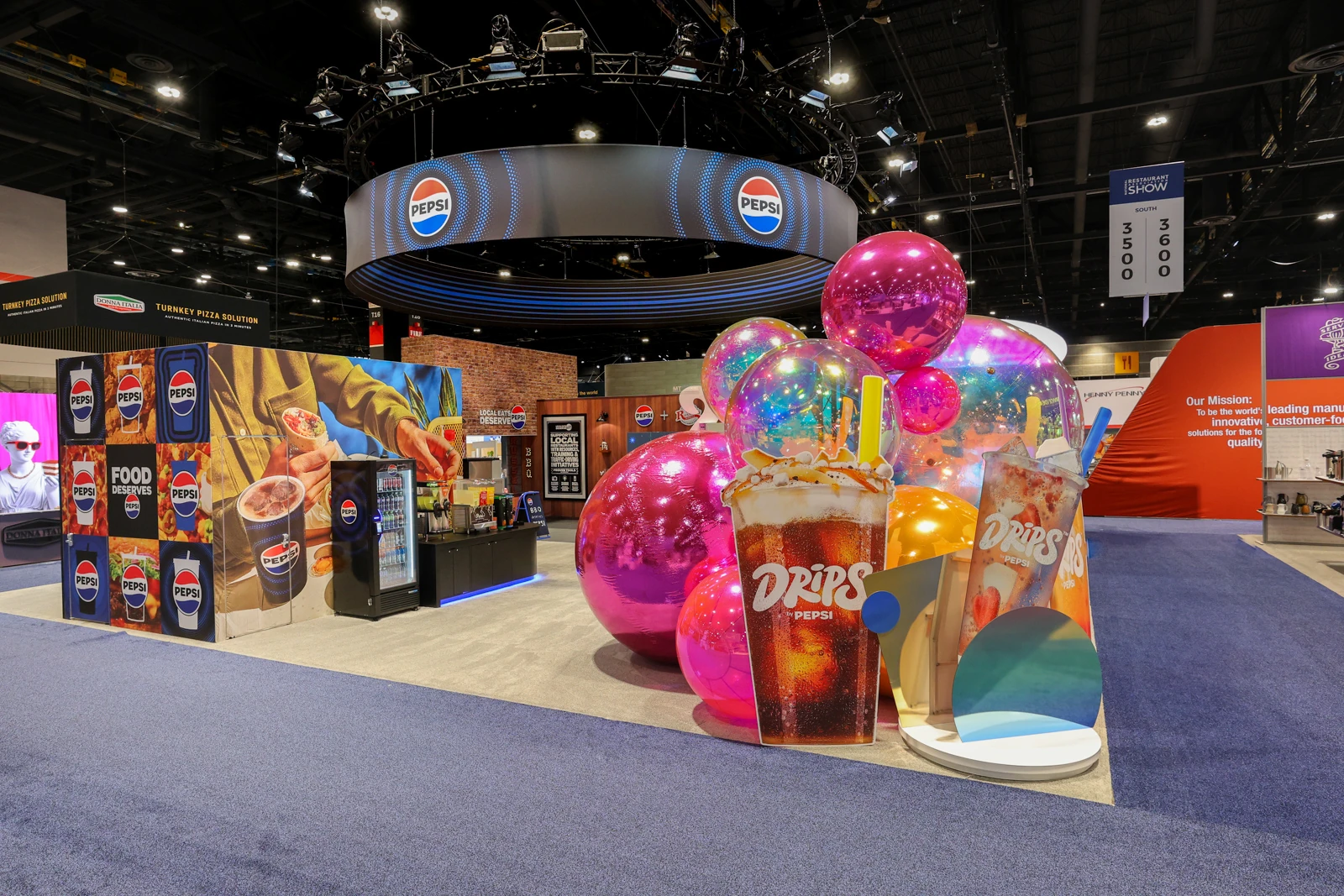
Downtown Atlanta's Flagship Convention Powerhouses
The Georgia World Congress Center anchors downtown Atlanta's convention dominance, providing over 1.5 million square feet of exhibit space ideal for food and beverage trade shows where brands deploy large-scale interactive booths featuring live cooking stations, beverage pouring bars, and multi-sensory sampling zones that capitalize on the venue's massive daily footfall from national conventions. Coordinators must sequence exhibit builds around the center's phased hall openings, coordinating drayage from off-site storage to align with union labor windows and ensuring that high-humidity control systems support delicate pastry displays or carbonated beverage setups without condensation issues during peak summer events.
Adjacent Centennial Olympic Park extends exhibit reach into outdoor activation territory, perfect for food and beverage brands running pop-up tasting pavilions that draw public crowds between indoor sessions at the Congress Center, with planning focused on weather-resilient flooring, shaded canopy integrations, and pathway compliance to handle spillover traffic from concurrent mega-shows. AmericasMart Atlanta complements this cluster through its dedicated market-week programming, where food and beverage exhibitors occupy permanent and temporary showrooms across three buildings, demanding precise coordination of inventory rotations, lighting grids for product photography, and buyer appointment scheduling synced to elevator capacities and inter-building shuttles.
Airport Corridor Venues for Fly-In Efficiency
Georgia International Convention Center in College Park thrives on its ATL SkyTrain linkage, making it a prime choice for food and beverage trade shows targeting Out of State distributors who prioritize minimal ground transport times post-flight, with exhibit planning emphasizing compact booth modulars that assemble swiftly in the center's 140,000 Square Foot hall to facilitate Back to Back demo cycles. Coordinators orchestrate pre-cleared freight deliveries via the venue's dedicated truck bays, timing them to avoid peak passenger surges and integrating climate-controlled zones for dairy or craft beer displays that maintain peak freshness during extended buyer walkthroughs.
Gateway Center Arena at College Park adds versatility with its arena-ballroom hybrid layout, suited for food and beverage events incorporating live pairing demonstrations alongside sports simulcasts, where planning involves acoustic partitioning for tasting zones amid amplified announcements and reinforced flooring for mobile bar units rolling between session blocks. This corridor's dual-venue proximity allows for overflow strategies, shuttling smaller groups between facilities while centralizing power drops and wastewater hookups essential for on-booth sanitation stations.
Operational flow in this zone hinges on leveraging SkyTrain schedules for Just in Time attendee surges, enabling food and beverage exhibitors to peak their engagement precisely when international flights unload.
Suburban Cobb for Regional and Corporate Depth
Cobb Convention Center in the northwest submarket captures food and beverage demand from corporate retreats and regional association expos, offering 235,000 square feet across exhibit halls and ballrooms where exhibitors craft boutique booth experiences like wine flight stations or artisanal cheese wheels without downtown's scale pressures. Planning here prioritizes hybrid room configurations, blending carpeted ballroom perimeters for lounge seating with hard-floor exhibit islands for high-traffic sampling counters, all coordinated to venue's flexible load-in via multiple freight elevators serving upper-level spaces.
This venue's positioning draws northwest Atlanta buyers seeking intimate interactions, prompting exhibit strategies that layer LED video walls behind charcuterie builds or integrate QR-activated recipe cards synced to booth traffic analytics, with coordinators managing adjacent parking overflows to sustain vendor access during multi-day formats. Integration with nearby hotels facilitates extended hospitality suites for private distributor dinners, extending exhibit impact beyond hall hours through catered extensions.
Cobb's ballroom-driven programs allow food and beverage brands to test market smaller product lines in controlled environments before scaling to flagship downtown deployments.
Cross-Zone Logistics for Multi-Venue Deployments
Atlanta's four-zone convention footprint demands sophisticated logistics orchestration for food and beverage exhibitors committing to simultaneous activations, such as pairing a GWCC flagship booth with GICC satellite demos or AmericasMart showroom commitments alongside Cobb regional pushes. Coordinators develop master timelines factoring inter-zone drive times—downtown to airport under 20 minutes via I-85, northwest to northeast via perimeter highways—ensuring exhibit elements like modular tasting counters ship sequentially to match venue load-in slots and return via consolidated teardowns minimizing empty miles.
Permits and inspections vary by cluster, with downtown requiring MARTA-adjacent ADA pathways for booth access, airport zones mandating TSA-compliant packaging for fly-in materials, and suburban sites emphasizing stormwater management for outdoor extensions, all audited pre-event to preempt delays. Refrigeration trailer hookups, critical for beverage kegs or fresh juice stations, get pre-negotiated across zones, with backup generators plotted for power redundancy during storm-prone seasons.
This networked approach turns Atlanta's dispersed venues into a unified exhibit platform, amplifying food and beverage brand visibility through omni-zone presence.
Exhibit Compliance and Setup Sequencing
Food and beverage displays in Atlanta venues necessitate rigorous compliance mapping, starting with fire marshal clearances for propane-fueled grills at GWCC or electrical audits for high-draw coffee brewers at AmericasMart, coordinated weeks ahead to align with each facility's pre-function walkthrough protocols. Setup sequencing prioritizes structural installs first—truss grids over sampling islands—followed by graphic wraps resistant to spills, then final merchandising of bottled products calibrated to eye-level buyer sightlines amid hall lighting variances.
Sanitation protocols amplify in tasting zones, with planning for graywater drains at Gateway Arena or dry-ice venting at Cobb, integrated into daily maintenance rotations that sustain booth appeal through closeout. Digital integrations like interactive kiosks for allergen info or virtual flavor profiles undergo venue WiFi load tests, ensuring smooth operation during peak concurrent sessions.
Master checklists tailored to Atlanta's union environments enforce sequenced crew handoffs, safeguarding exhibit integrity from install through dismantle.
Scaling Booths to Venue Capacities
Food and beverage exhibit scaling mirrors Atlanta venue diversity, from 10x20 islands at suburban Cobb suiting startup kombucha pours to 40x80 GWCC behemoths hosting full bar lines with overhead bottle displays and undercounter keg chilling. Coordinators spec modular systems that expand via snap-lock panels, adapting footprint to hall diagrams while preserving brand visuals like embossed woodgrain for whiskey tastings or mirrored backsplashes reflecting colorful cocktail arrays.
AmericasMart's vertical merchandising demands tallboy risers for shelf-stable goods, sequenced for forklift access during market-week rebuilds, while airport venues favor low-profile carts rolling via SkyTrain-adjacent docks for quick buyer previews. Capacity forecasting ties booth sizing to projected traffic, incorporating queue barriers for high-demand sushi rolls or flow-through designs for self-serve nut clusters.
This scalable framework equips exhibitors to match investment to venue draw, maximizing ROI across Atlanta's tiered event spectrum.
FAQ
Which Atlanta venues best suit large-scale food and beverage conventions?
Georgia World Congress Center and AmericasMart Atlanta excel for flagship events, offering vast hall spaces for immersive tasting experiences and market-week showrooms, while Centennial Olympic Park supports complementary outdoor activations drawing massive public engagement.
How does the airport corridor benefit food and beverage exhibitors?
Georgia International Convention Center and Gateway Center Arena leverage ATL SkyTrain access for swift international buyer arrivals, enabling fast-turn booth setups ideal for time-sensitive product demos and hybrid event formats with minimal logistical friction.
What role do suburban venues play in food and beverage strategies?
Cobb Convention Center handles regional trade shows and corporate gatherings, providing ballroom flexibility for intimate samplings and scalable exhibits that test products in less competitive environments before downtown escalations.
How to manage logistics across multiple Atlanta convention zones?
Develop inter-zone timelines accounting for highway connectors like I-85, pre-negotiate freight slots, and consolidate teardowns to optimize transport, ensuring perishables maintain Chain of Custody throughout deployments.
What compliance considerations apply to food tasting booths?
Secure fire marshal approvals for cooking elements, sanitation hookups for wastewater, and electrical audits for appliances, all sequenced per venue protocols with pre-event inspections to avoid setup disruptions.
Can exhibits scale between small regional shows and major expos?
Modular designs with expandable panels and adaptable risers allow smooth transitions, matching booth complexity to venue traffic while standardizing brand elements for consistent impact.
Related Atlanta scopes
Continue with a connected Atlanta scope.
Inquiry
Trade Show Display Rental of Atlanta
Rental-first Atlanta trade show systems designed around venue-aware planning, modular reuse, and cleaner show-floor execution.