Event Types / Corporate Event Services Atlanta
Corporate Event Services Atlanta
Exhibit House of Atlanta coordinates comprehensive corporate event services across the city's dynamic venue landscape, ensuring smooth execution from initial planning through post-event analysis in key operating zones like downtown, airport corridors, and suburban facilities.
Mastering Venue Selection in Atlanta's Zoned Landscape
Selecting the right venue begins with understanding Atlanta's four primary operating zones: downtown's concentrated exhibit and activation demand at Georgia World Congress Center, Centennial Olympic Park, and AmericasMart Atlanta; the airport corridor's fly-in efficiency at Georgia International Convention Center and Gateway Center Arena @ College Park; the Cumberland/Cobb area's corporate and regional focus via Cobb Convention Center; and the Duluth/Gwinnett corridor's community and association draw at Gas South Convention Center. Each zone presents unique logistical profiles, from downtown's deep clustering for large-scale corporate exhibits to airport sites' SkyTrain-enabled quick access for Out of Town executives attending strategy offsites or leadership summits.
Corporate events benefit from downtown's flagship scale, where GWCC's planning guides outline hall divisions suitable for keynote stages alongside exhibit booths for vendor interactions, while Centennial Olympic Park offers outdoor extensions for team-building activations adjacent to convention flows. Airport venues like GICC emphasize floor plans that accommodate rapid setups for meetings with sports-arena tie-ins at Gateway Center, ensuring minimal travel disruption for international corporate teams.
Suburban choices such as Cobb Convention Center provide ballroom-centric layouts ideal for awards galas or training programs, with ample parking and proximity to northwest corporate parks in Sandy Springs and beyond, allowing for hybrid formats that incorporate regional supplier showcases without downtown congestion.
Logistics for Downtown Corporate Productions
Downtown Atlanta serves as the epicenter for corporate events requiring extensive exhibit integration, with Georgia World Congress Center's multi-building complex enabling segmented programs where main halls host general sessions and adjacent spaces manage trade floors or branded lounges. Centennial Olympic Park complements this by providing weather-resilient outdoor areas for receptions or product unveilings, linked directly to GWCC pathways that streamline attendee transitions from indoor exhibits to park activations.
AmericasMart Atlanta adds showroom depth for corporate buyer events, where permanent market spaces convert into temporary activation zones during off-peak periods, supporting logistics like Just in Time freight coordination through dedicated docks and elevator banks designed for high-volume exhibit handling. Planners must account for peak-season overlaps with public conventions, timing load-ins to align with GWCC's published schedules that prioritize early access for complex corporate builds involving custom podiums, video walls, and interactive displays.
This zone's infrastructure demands foresight in power allocations for tech-heavy corporate agendas, ensuring exhibit elements like LED backdrops or charging stations integrate without straining venue capacities shared across concurrent programs.
Airport Corridor Efficiency for Fly-In Corporates
The airport/College Park corridor positions corporate events for maximum accessibility, with Georgia International Convention Center's floor plans offering column-free expanses ideal for open-format town halls or innovation showcases, bolstered by ATL SkyTrain links that cut transfer times for arriving delegates. Gateway Center Arena @ College Park enhances this with arena-scale staging for motivational keynotes or team rallies, where sports-adjacent vibes suit high-energy corporate morale boosters.
Logistics here emphasize fast-turn capabilities, as GICC's proximity to airport cargo facilitates exhibit shipments for last-minute product launches, while venue protocols support 24-hour prep windows tailored to jet-lagged teams needing immediate setup for breakout workshops or networking pods. This cluster excels for events under 72 hours, minimizing hotel dependencies through on-site lodging tie-ins and shuttle loops.
Coordinating across these sites involves pre-clearing SkyTrain usage for group moves, ensuring corporate timelines sync with flight banks and avoiding peak commuter rushes that could delay exhibit installs or activation rehearsals.
Suburban Venues for Regional Corporate Scale
Northwest Atlanta's Cobb Convention Center captures corporate demand through its ballroom-heavy design, perfect for gala dinners, board meetings, or vendor fairs where exhibit footprints fit neatly into pre-function areas without encroaching on plenary spaces. This submarket's lower density allows for extended load-out periods, accommodating corporate events that spill into multi-day formats with on-site storage for booth elements between sessions.
Northeast options like Gas South Convention Center in the Duluth/Gwinnett corridor provide expo hall versatility for association-partnered corporate programs, where large-format exhibits for training expos or partner summits leverage arena adjacencies for evening entertainment segments. Planners prioritize these for events drawing regional attendees from Brookhaven, Decatur, or Chamblee, with parking ratios that support carpool-heavy corporate groups.
Operational specifics include coordinating with venue teams on HVAC zoning for exhibit zones housing demo equipment, ensuring consistent climates during summer peaks when suburban venues host indoor-focused corporate retreats.
Exhibit Integration in Corporate Frameworks
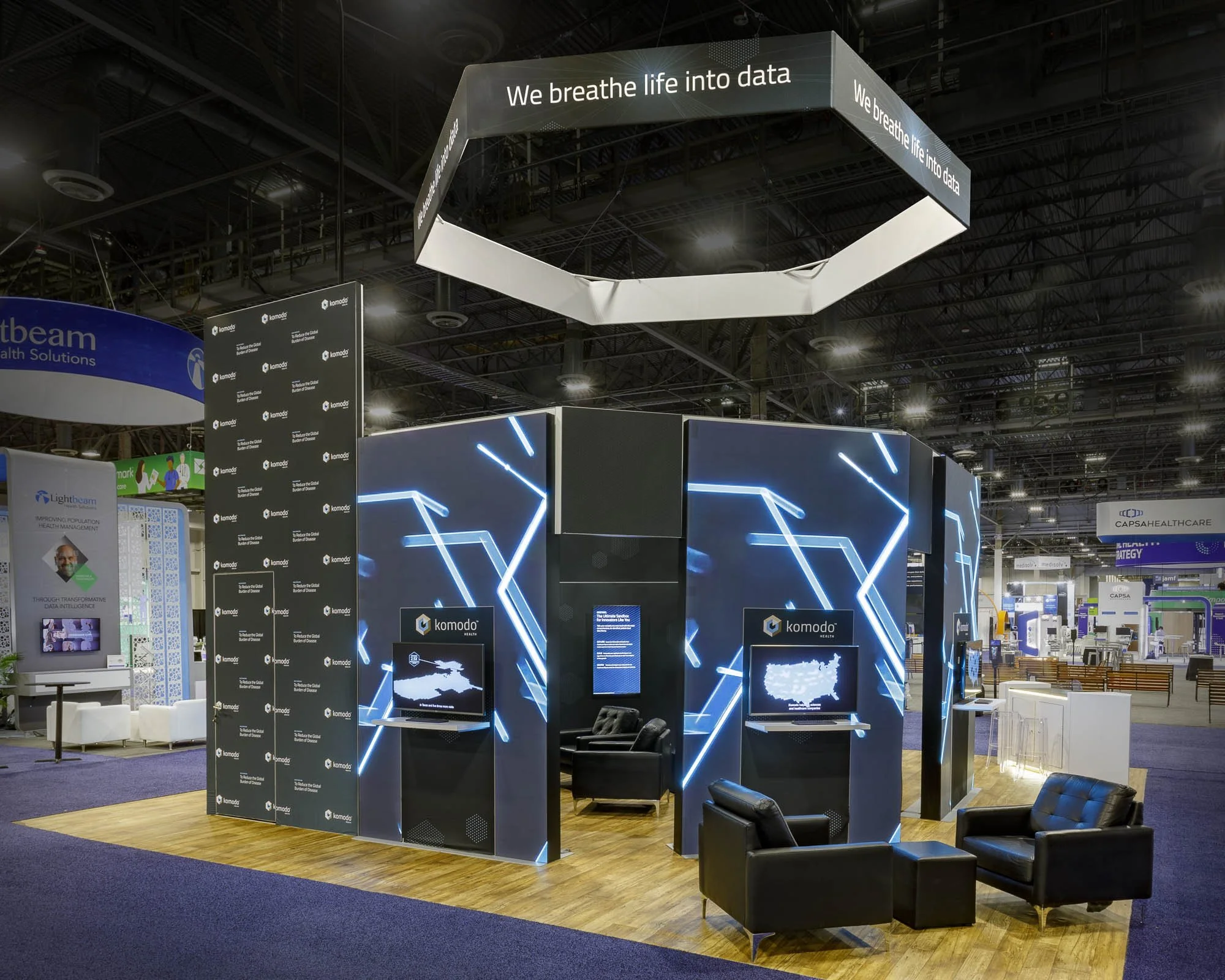
Corporate events gain impact through targeted exhibit elements that reinforce messaging, such as modular booths at GWCC for interactive demos during conference interludes or pop-up displays at AmericasMart for buyer previews tied to main programming. Coordination ensures these integrate with venue sightlines, positioning activations where foot traffic from general sessions maximizes exposure without disrupting flow.
In airport settings, compact exhibits at GICC suit quick-hit product overviews for fly-in crowds, using lightweight frames that assemble within SkyTrain-adjacent timelines, while Gateway Arena hosts larger kinetic installs for launch spectacles visible from entry concourses. Suburban applications at Cobb feature durable setups for recurring corporate roadshows, with storage provisions allowing phased reveals over multi-session events.
This exhibit layer demands material specs aligned with venue freight elevators and fire codes, delivering corporate narratives through tangible touchpoints that extend beyond stages into immersive zones.
Activation Strategies Across Venue Clusters
Activations elevate corporate events by embedding experiential layers, like Centennial Park gamification stations that draw session breaks into branded challenges or GICC lounge pods mimicking office collaborations for networking prompts. Downtown's cluster density supports chained activations, flowing from GWCC exhibits to AmericasMart tastings for holistic corporate storytelling.
Airport venues enable travel-themed activations at Gateway Arena, such as VR previews synced to flight arrivals, while Cobb's regional pull suits community-partnered booths that blend corporate goals with local supplier spotlights. Gwinnett's Gas South facilitates scale-up activations in expo halls, coordinating lighting grids for evening corporate parties post-daytime sessions.
Success hinges on activation mapping to attendee journeys, pre-testing tech in venue power drops to avoid glitches during peak corporate interactions.
Program Management and Metrics
Full-spectrum coordination covers pre-event audits of venue capacities against corporate headcounts, scripting transitions between GWCC plenaries and exhibit zones or GICC meetings and SkyTrain exits. Mid-event adjustments respond to real-time flows, like reallocating Cobb ballroom pods based on session overruns.
Post-event phases analyze activation dwell times via badge scans or app data, refining future corporate deployments across clusters. This closed-loop management ensures ROI through documented alignments of exhibit performance with program objectives in Atlanta's varied zones.
Metrics extend to sustainability tracking, noting reusable exhibit impacts at recurring suburban sites versus one-off downtown builds.
FAQ
What makes downtown Atlanta ideal for large corporate events?
Downtown's Georgia World Congress Center, Centennial Olympic Park, and AmericasMart Atlanta offer clustered exhibit spaces, outdoor extensions, and showroom logistics for high-volume programs with smooth attendee flows.
How do airport venues support fly-in corporate agendas?
Georgia International Convention Center and Gateway Center Arena @ College Park provide SkyTrain access, rapid floor plan setups, and arena staging optimized for quick-turn executive meetings and activations.
Why choose suburban sites like Cobb for corporate functions?
Cobb Convention Center delivers ballroom focus with pre-function exhibit areas, ample parking, and extended timelines suited to regional corporate galas or multi-day trainings.
Can exhibits integrate into all Atlanta venue types?
Yes, from GWCC modular booths to GICC compact demos and Gas South large-format displays, coordination tailors specs to each cluster's freight, power, and fire protocols.
What logistics unify multi-zone corporate planning?
Turnkey management syncs load-ins with venue guides, attendee transit via SkyTrain or shuttles, and post-event metrics across downtown, airport, Cobb, and Gwinnett operations.
How do activations enhance corporate ROI?
Targeted experiences like park challenges or arena VR tie into session breaks, boosting engagement metrics and extending messaging through venue-specific touchpoints.
Related Atlanta scopes
Continue with a connected Atlanta scope.
Inquiry
Trade Show Display Rental of Atlanta
Rental-first Atlanta trade show systems designed around venue-aware planning, modular reuse, and cleaner show-floor execution.