Locations / Johns Creek GA Trade Show Display Rental: Planning and Coordination for Atlanta Events
Johns Creek GA Trade Show Display Rental: Planning and Coordination for Atlanta Events
Authoritative guidance for coordinating trade show exhibits that connect Johns Creek businesses to Atlanta’s distributed convention zones and suburban expo facilities.
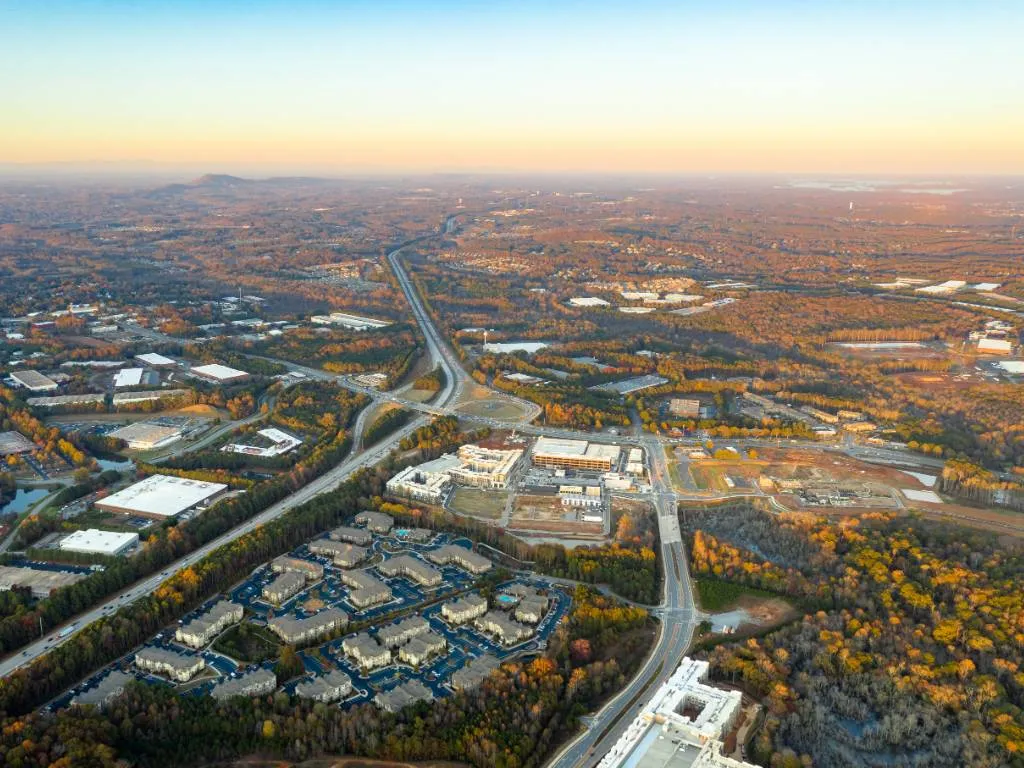
Johns Creek Within Atlanta’s Distributed Trade Show Zones
Atlanta’s trade show demand does not operate from a single centralized hub. Research identifies four practical zones that reflect real patterns of venue clustering and attendee access: downtown Atlanta with its concentration of GWCC, Centennial Olympic Park, and AmericasMart; the airport and College Park corridor designed around ATL SkyTrain and fly-in efficiency; the Cumberland and Cobb submarket; and the Duluth and Gwinnett corridor served by suburban expo facilities. Johns Creek sits squarely in the northeastern sector, creating natural alignment with Gwinnett-area events while remaining within reasonable driving range of downtown and airport venues. This geography supports coordinated planning that treats the entire metro as an integrated network rather than isolated markets.
For organizations based in Johns Creek, the implication is a need for rental displays that transition effectively between environments. Downtown flagship events at the Georgia World Congress Center often involve larger attendee volumes and stricter schedule densities, requiring exhibits engineered for rapid reconfiguration and high visual impact. By contrast, suburban programs in the Gwinnett corridor tend to emphasize targeted engagement within more flexible hall layouts. Planning therefore begins with clear zone mapping so that display choices reflect documented venue characteristics instead of assumptions about uniform requirements across the Atlanta region.
The northeastern suburban position of Johns Creek also influences audience expectations. Corporate and association events drawn to Gas South Convention Center or similar northeast facilities frequently attract regional decision-makers who value practical demonstrations over theatrical productions. Coordination resources help translate these nuances into rental selections—modular inline or peninsula systems that maintain brand fidelity while adapting footprint to the specific hall. This zone-aware methodology prevents over- or under-design, keeping budgets aligned with realistic participation across the four documented operating areas.
Venue-Specific Nuances Shaping Exhibit Coordination
Each Atlanta venue cluster carries operational details that directly affect rental planning. The Georgia World Congress Center functions as the flagship with expansive square footage and detailed planning guides that outline everything from load-in protocols to utility specifications. AmericasMart, focused on wholesale market programming, introduces different traffic flows and showroom-style presentation requirements. These downtown and market-campus distinctions matter for Johns Creek teams that schedule multiple events per year, demanding modular rental inventories capable of shifting from large-scale island configurations to more intimate inline setups without losing visual continuity.
Airport-adjacent facilities such as the Georgia International Convention Center and Gateway Center Arena emphasize convenience for national attendees arriving via Hartsfield-Jackson. Floor plans here highlight adjacency to transit connections, influencing how exhibits are designed for quick attendee orientation and efficient use of booth space near high-traffic corridors. For Johns Creek planners, this translates to rental choices that incorporate clear sight lines and technology touchpoints suitable for time-sensitive fly-in audiences. Coordination ensures these elements align with the venue’s documented layout rather than generic assumptions.
Suburban venues in the Cobb and Gwinnett corridors present yet another layer of differentiation. Gas South Convention Center and Cobb Convention Center typically host association and corporate programs that benefit from easier regional driving access. These facilities often feature more flexible column spacing and varied ceiling heights, allowing for creative use of hanging signage or taller display structures. Johns Creek’s location near the northeast corridor reduces transit variables for these events, enabling tighter focus on content delivery and audience interaction within the rental exhibit itself. Planning guides and floor plans become essential references for confirming dimensional compatibility before finalizing configurations.
Successful coordination therefore treats venue specificity as a core decision driver. By referencing actual planning documents and documented clusters, exhibit strategies avoid mismatch between display scale and hall realities across downtown, airport, and suburban environments.
Coordinating Rental Solutions for Northeast Suburban Events
The Duluth and Gwinnett corridor represents a growing segment of Atlanta’s trade show activity, with venues that serve corporate training, regional association meetings, and community expos. Johns Creek’s adjacency to this corridor positions local organizations to participate with reduced logistical overhead compared to downtown-only scheduling. Rental coordination in this context prioritizes flexibility—displays that can be configured for 10x20 footprints one month and expanded island formats the next—while maintaining consistent branding that resonates with suburban professional audiences.
Operational detail becomes critical when moving between suburban and urban venues. Suburban halls may emphasize ease of attendee navigation and breakout session proximity, which favors rental exhibits incorporating integrated literature racks, digital kiosks, and seating areas. These elements support longer dwell times typical of northeast corridor events. Coordination resources help map these functional requirements against the broader Atlanta calendar so that a single rental program can serve both Gwinnett-area gatherings and occasional downtown activations at Centennial Olympic Park or GWCC.
Budget considerations also shift by district. Suburban events frequently operate on tighter timelines and more focused attendee lists, making cost-efficient modular rentals preferable to one-off custom builds. Planning that accounts for reuse across the four zones maximizes return on investment. For Johns Creek teams, this means selecting rental partners capable of supporting multi-venue campaigns rather than single-event transactions, ensuring inventory arrives properly configured regardless of final destination within the Atlanta metro.
Integrating Downtown and Airport Venues into Johns Creek Strategies
Many Johns Creek organizations maintain active calendars that span suburban expos and major downtown conventions. The Georgia World Congress Center and AmericasMart create the deepest cluster of high-profile demand, requiring exhibits that command attention within expansive, column-dense halls. Coordination involves early review of the GWCC planning guide to understand load-in windows, electrical specifications, and material handling protocols that differ from suburban facilities. This preparation prevents last-minute adjustments and supports smoother execution even when the exhibiting team travels from the northeast suburbs.
Airport corridor events at GICC and Gateway Center Arena add another dimension. These venues explicitly market their SkyTrain connectivity and proximity to ATL, making them ideal for national or international draw. Rental displays for these programs benefit from lightweight components and tool-free assembly that accommodate tighter move-in schedules common to airport-adjacent facilities. For Johns Creek planners, the relative driving ease from the northeast allows same-day oversight of final setup while still leveraging the fly-in advantages these venues advertise.
The key lies in unified planning that respects each district’s operational signature. Downtown events may call for dramatic backlit graphics and larger footprints to compete with neighboring exhibits, while airport venues reward clean, modern designs that facilitate quick conversations between sessions. By treating these as complementary rather than competing priorities, coordination delivers rental solutions that scale intelligently across the full Atlanta landscape without forcing separate inventories for each zone.
Operational Details and Best Practices for Multi-Zone Execution
Authoritative coordination rests on attention to documented operational realities rather than generalized advice. The GWCC planning guide, GICC floor plans, and venue cluster data provide concrete reference points for determining exhibit dimensions, weight limits, and presentation capabilities. For Johns Creek teams, this means building checklists that account for highway transit times between the northeast suburbs and downtown or airport locations, ensuring rental components are selected with durability and quick reconfiguration in mind.
Technology integration represents another operational layer. Hybrid events have become standard across all four zones, with suburban corporate gatherings in the Gwinnett corridor often incorporating live streaming or interactive screens to reach both in-person and remote audiences. Rental displays that embed these capabilities without complicating setup help maintain focus on content delivery. Coordination includes verifying power and data requirements against each venue’s published specifications to avoid disruptions.
Finally, measurement frameworks should reflect zone-specific goals. Downtown flagship events may prioritize lead volume within dense foot traffic, while Gwinnett corridor programs emphasize deeper conversations with regional stakeholders. Exhibit planning that incorporates these distinctions—through targeted messaging, demonstration areas, or data-capture stations—delivers measurable outcomes. Regular reference to Atlanta’s documented market signals keeps strategies current as venue programming evolves.
Developing a Unified Exhibit Program Across Atlanta Districts
The most effective Johns Creek trade show participation treats Atlanta’s four zones as an interconnected system rather than separate silos. A core rental inventory—designed around modular frames, interchangeable graphic panels, and adaptable accessories—can address requirements from intimate suburban sessions at Gas South to high-traffic downtown halls at the Georgia World Congress Center. This unified approach reduces duplication costs while ensuring brand presentation remains consistent regardless of location.
Coordination extends beyond hardware to scheduling and content alignment. By mapping major events across downtown, airport, Cobb, and Gwinnett calendars, planners identify thematic overlaps that allow one exhibit program to support multiple appearances with minor adjustments. For instance, core messaging developed for a Gwinnett corporate event can be refreshed with district-specific data for subsequent downtown activation at AmericasMart. Such layering maximizes the return on planning investment.
Long-term success also depends on continuous refinement based on documented outcomes. Tracking which configurations performed best in each zone—measured against venue density, attendee dwell time, and lead quality—builds institutional knowledge that sharpens future coordination. As Atlanta’s convention infrastructure continues to evolve, maintaining an authoritative, zone-aware perspective ensures Johns Creek organizations remain competitive without being limited by any single-district viewpoint.
Logistical and Strategic Advantages of the Northeastern Corridor
Johns Creek’s location within the northeastern sector of the Atlanta metro creates specific logistical advantages for events in the Duluth and Gwinnett corridor. Reduced travel times to suburban venues allow exhibiting teams to focus more energy on presentation quality and audience engagement rather than extended commuting. When combined with strategic rental choices that emphasize quick assembly, this proximity supports tighter scheduling windows common to regional corporate and association programs.
At the same time, major highways provide reasonable access to downtown and airport clusters, enabling Johns Creek organizations to maintain a diversified event calendar without prohibitive logistics. Coordination that factors real transit patterns helps optimize staffing, material movement, and storage considerations between appearances. The result is a more sustainable participation model that leverages the full spectrum of Atlanta’s documented trade show demand.
Ultimately, success stems from treating exhibit rental as a strategic coordination function rather than a transactional purchase. By grounding decisions in the actual venue clusters, planning guides, and market signals that define Atlanta’s landscape, Johns Creek teams can deploy displays that perform effectively whether the destination is a flagship downtown convention or a targeted suburban expo. This authoritative approach delivers consistency, efficiency, and measurable impact across every district.
FAQ
How does Johns Creek fit into Atlanta’s overall trade show zones?
Johns Creek sits in the northeastern sector, aligning closely with the Duluth and Gwinnett corridor while remaining accessible to downtown, airport, and Cobb venues. This supports coordinated exhibit planning across all four documented operating zones rather than a single district focus.
Which Atlanta venues are most relevant for organizations based in Johns Creek?
Key venues include the Georgia World Congress Center, AmericasMart, Gas South Convention Center, Cobb Convention Center, Georgia International Convention Center, and Gateway Center Arena. Each carries distinct operational characteristics that influence rental display choices.
Why is zone-specific coordination important for Johns Creek exhibitors?
Downtown flagship events, airport fly-in programs, and suburban expos each present different floor plans, audience profiles, and logistical demands. Coordination that respects these documented differences prevents mismatched exhibits and improves outcomes across the Atlanta metro.
Can the same rental inventory work for both suburban and downtown events?
Yes. Modular rental systems with interchangeable components can be configured for the flexible layouts typical of Gwinnett corridor venues as well as the larger-scale requirements of GWCC and AmericasMart when planning references official floor plans and planning guides.
What role do planning guides and floor plans play in successful coordination?
They supply verifiable details on dimensions, utilities, load-in procedures, and hall configurations. Referencing these documents ensures rental selections align with each venue’s operational reality rather than generalized assumptions.
What makes an authoritative planning resource valuable for Johns Creek businesses?
It translates Atlanta’s documented market signals and venue clusters into practical exhibit strategies that respect district-level differences, helping organizations participate effectively across suburban, downtown, and airport events.
Related Atlanta scopes
Continue with a connected Atlanta scope.
Inquiry
Trade Show Display Rental of Atlanta
Rental-first Atlanta trade show systems designed around venue-aware planning, modular reuse, and cleaner show-floor execution.