Locations / Exhibit Planning and Coordination for Macon, GA
Exhibit Planning and Coordination for Macon, GA
Strategic guidance for creating effective trade show exhibits and brand activations at Macon events, supported by Atlanta-based design, fabrication, and program oversight.
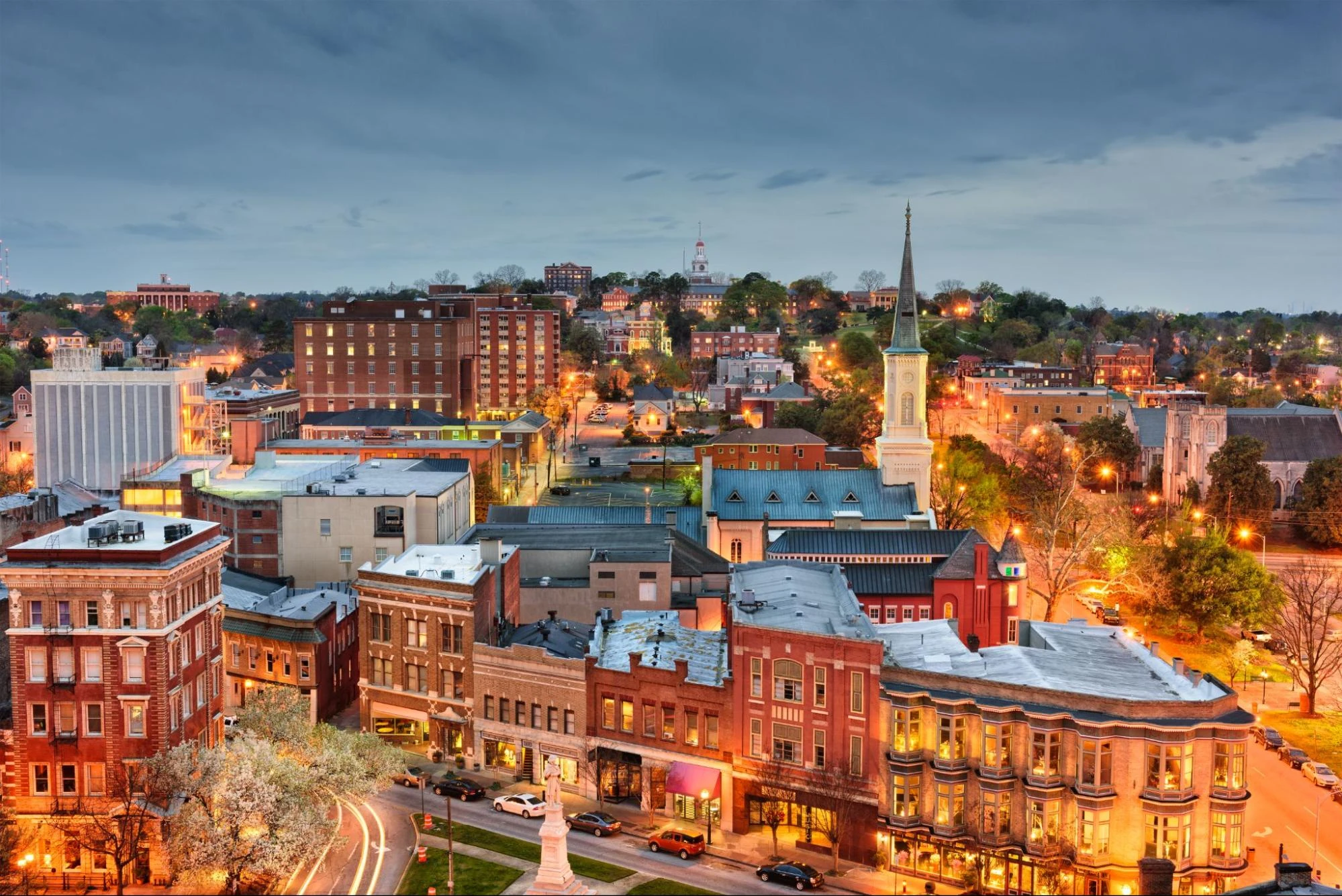
Positioning Macon Within Georgia's Event Geography
Macon functions as a strategic secondary market for many organizations whose primary exhibit activity occurs within Atlanta's established convention zones. The flagship downtown Atlanta district, defined by the Georgia World Congress Center, Centennial Olympic Park, and AmericasMart, sets the standard for large-scale trade shows and buyer engagements. Organizations that activate successfully in these dense environments often extend their programs southward to Macon, requiring exhibit solutions that translate effectively across different scales and audience densities.
The airport-adjacent corridor, led by the Georgia International Convention Center and Gateway Center Arena at College Park, emphasizes fly-in convenience and rapid access via the ATL SkyTrain. This zone captures events where time efficiency matters greatly. Exhibitors coordinating between this corridor and Macon benefit from planning approaches that prioritize durable construction and streamlined transport, ensuring installations remain pristine after relatively short hauls along established interstate routes.
Northwest and northeast suburban venues, including the Cobb Galleria and Gas South Convention Center, address corporate, association, and community-driven demand outside the urban core. These facilities often host events with distinct audience profiles compared to downtown or airport locations. Effective coordination for Macon therefore involves creating flexible exhibit systems capable of slight modifications to suit the specific energy and expectations of each submarket while preserving core brand elements.
This multi-zone perspective informs every planning decision. Rather than treating Macon in isolation, the most effective programs view it as an extension of a comprehensive Georgia strategy, where Atlanta's infrastructure provides the creative and operational foundation.
Custom Design and Fabrication for Regional Performance
Custom exhibit fabrication forms the backbone of programs that succeed in both Atlanta's major venues and secondary markets like Macon. The process begins with detailed discovery that maps client objectives against the specific characteristics of target events. Designs must account for varying booth footprints, ceiling heights, and audience flow patterns encountered across Georgia locations.
Fabrication occurs within controlled Atlanta-area facilities equipped for precision manufacturing of structural components, graphic applications, and integrated technology elements. This centralized approach ensures quality consistency while allowing for modifications based on lessons from downtown Atlanta shows at the Georgia World Congress Center or AmericasMart activations before adapting elements for Macon deployments.
Material selection receives particular attention during the planning phase. Components must balance visual impact, durability during transport, and ease of assembly under varying time constraints. Lightweight yet robust systems prove especially valuable when moving between the Cobb Convention Center, GICC, and Macon sites within compressed schedules.
The fabrication timeline integrates with overall program milestones, providing adequate buffer for refinements after initial Atlanta events while maintaining readiness for subsequent Macon appearances. This sequencing maximizes investment by creating assets that deliver value across multiple uses and locations.
Logistics and Transportation Planning Between Atlanta and Macon
Effective logistics coordination represents a critical success factor when executing programs that span Atlanta's convention clusters and nearby cities including Macon. The relatively short distance creates advantages for Just in Time delivery and responsive adjustments, provided that planning accounts for traffic patterns, loading dock requirements, and venue-specific access protocols.
Exhibits fabricated in Atlanta benefit from established transportation networks that serve the Georgia World Congress Center, Gateway Center Arena, and suburban facilities before continuing to Macon. Professional coordination ensures proper crating, climate-controlled transport where necessary, and secure handling that protects graphic integrity and structural components throughout the journey.
Advance planning incorporates detailed site surveys and timeline mapping. This includes alignment with move-in schedules at the Georgia International Convention Center or Cobb Galleria as well as corresponding Macon facilities. Contingency protocols address potential disruptions while maintaining the overall program cadence.
Post-event logistics receive equal attention. Efficient dismantle and return processes allow for rapid refurbishment or modification in Atlanta before the next activation, whether in Duluth, College Park, or back in Macon. This closed-loop approach minimizes downtime and preserves asset condition across extended campaigns.
Technology Integration Within Exhibit Experiences
Modern exhibits serving Macon and Atlanta markets increasingly incorporate interactive technology to deepen audience engagement. Planning these elements requires careful consideration of power requirements, data connectivity, and technical support availability across different venues. Solutions range from simple tablet integrations to more sophisticated augmented reality experiences.
The Georgia World Congress Center and AmericasMart often feature robust infrastructure that supports advanced installations. Designs for Macon must either match these capabilities or provide self-contained solutions that perform independently. This flexibility ensures consistent experiences regardless of location within the regional circuit.
Content management systems allow exhibitors to update messaging and data capture tools between events. A program that launches at the Gateway Center Arena can be refined based on attendee interactions before deployment in Macon, creating continuous improvement throughout the calendar. Analytics integration provides measurable insights that inform both creative and budgetary decisions.
Technical documentation and training materials form essential components of the coordination package. These resources help show floor staff maximize the technology's potential while avoiding common operational pitfalls that could diminish impact.
Program Management Best Practices for Multi-Market Campaigns
Coordinating exhibits across Atlanta's diverse zones and secondary markets demands structured program management that maintains oversight without introducing unnecessary complexity. Centralizing planning in Atlanta creates efficiencies while allowing for localized adjustments appropriate to each venue's character, whether the dense professional environment of downtown or the community focus often found in Macon.
Timeline management incorporates key milestones from initial design approval through fabrication, transport, installation oversight, and post-event reporting. This framework draws on operational patterns established at major facilities like the Georgia World Congress Center and Gas South Convention Center to create predictable rhythms that extend reliably into Macon activations.
Budget allocation receives strategic attention, balancing investment in reusable assets against show-specific customizations. Programs that activate in multiple zones benefit from modular approaches where core elements serve Atlanta events while supplementary components address Macon-specific opportunities.
Vendor coordination and documentation management ensure all parties operate from current information. This systematic approach reduces errors and supports the smooth execution that sophisticated exhibitors expect across Georgia's event calendar.
Evaluating Performance and Optimizing Future Programs
Meaningful evaluation completes the exhibit planning cycle for Macon and greater Atlanta programs. Metrics should extend beyond basic lead counts to include engagement quality, brand recall, and pipeline influence. Establishing these frameworks during initial planning ensures data collection aligns with specific objectives for each market segment.
Atlanta's flagship venues often provide rich opportunities for comparative analysis. Performance at the Centennial Olympic Park activations or Cobb Convention Center programs can inform expectations and tactical adjustments for Macon events. This data-driven approach helps refine messaging, layout, and staffing models over time.
Post-event debriefs capture both quantitative results and qualitative observations that might not appear in standard reports. These insights prove particularly valuable when planning subsequent regional circuits that include both primary Atlanta zones and important secondary markets.
Long-term optimization involves periodic program audits that assess asset condition, relevance of technology choices, and overall return on investment. This forward-looking perspective ensures exhibit programs evolve in alignment with changing market conditions across Georgia.
Developing Effective Pre-Event Preparation Protocols
Thorough preparation distinguishes high-performing exhibits in competitive Georgia markets. Pre-event protocols should encompass staff briefing, material verification, technology testing, and contingency planning. These activities draw on operational knowledge gained from Atlanta's busiest venues to establish standards that transfer effectively to Macon.
Team preparation includes detailed familiarization with exhibit features, lead capture procedures, and engagement strategies tailored to expected audience profiles. The professional audiences at AmericasMart or GICC differ in meaningful ways from participants at other regional events, requiring appropriate adjustments in approach.
Physical inspection checklists verify that all components have survived transport and storage without damage. This verification step, routinely applied between downtown Atlanta installations and suburban or Macon shows, prevents small issues from becoming significant problems during valuable show hours.
Final coordination with venue personnel and general service contractors ensures alignment on all logistical details. When these elements receive proper attention during planning, the on-site experience becomes focused on relationship building rather than troubleshooting.
FAQ
How does Macon fit into broader Atlanta regional exhibit strategies?
Macon operates as a complementary drive-market location that extends programs developed for Atlanta's primary zones including downtown, airport corridor, Cobb, and Gwinnett areas. Coordination from Atlanta allows for efficient use of custom fabricated assets across these markets while maintaining consistent brand presentation.
What fabrication considerations matter most for Atlanta-to-Macon transport?
Durability during short-haul transport, modular construction for flexibility, and materials that maintain appearance after repeated setup and dismantle cycles. Centralized Atlanta fabrication ensures these requirements are designed into every component from the beginning.
Which Atlanta venues provide the best learning opportunities for Macon programs?
The Georgia World Congress Center, AmericasMart, Georgia International Convention Center, and Cobb Convention Center each offer distinct operational insights. Performance data from these flagship locations informs tactical refinements for successful execution in secondary markets including Macon.
How far in advance should planning begin for coordinated Atlanta and Macon exhibits?
Complex custom programs benefit from six to nine months of lead time to allow for design, fabrication, initial deployment in primary Atlanta venues, and subsequent optimization for Macon. Simpler modular solutions can be coordinated effectively with shorter timelines.
What role does technology play in modern regional exhibit programs?
Technology enhances engagement when selected and integrated thoughtfully. Solutions should be scalable across venue types, from the advanced infrastructure at the Georgia World Congress Center to more self-contained setups appropriate for Macon and suburban locations.
How can exhibitors measure success across multiple Georgia markets?
Comprehensive frameworks track both quantitative metrics and qualitative outcomes. Comparing results between downtown Atlanta activations, airport corridor events, suburban shows, and Macon appearances reveals which elements perform most effectively with different audiences.
Related Atlanta scopes
Continue with a connected Atlanta scope.
Inquiry
Trade Show Display Rental of Atlanta
Rental-first Atlanta trade show systems designed around venue-aware planning, modular reuse, and cleaner show-floor execution.